

5 Hyundai IONIQ 6 Aerodynamics Design Secrets for Reno, NV Drivers
Summary
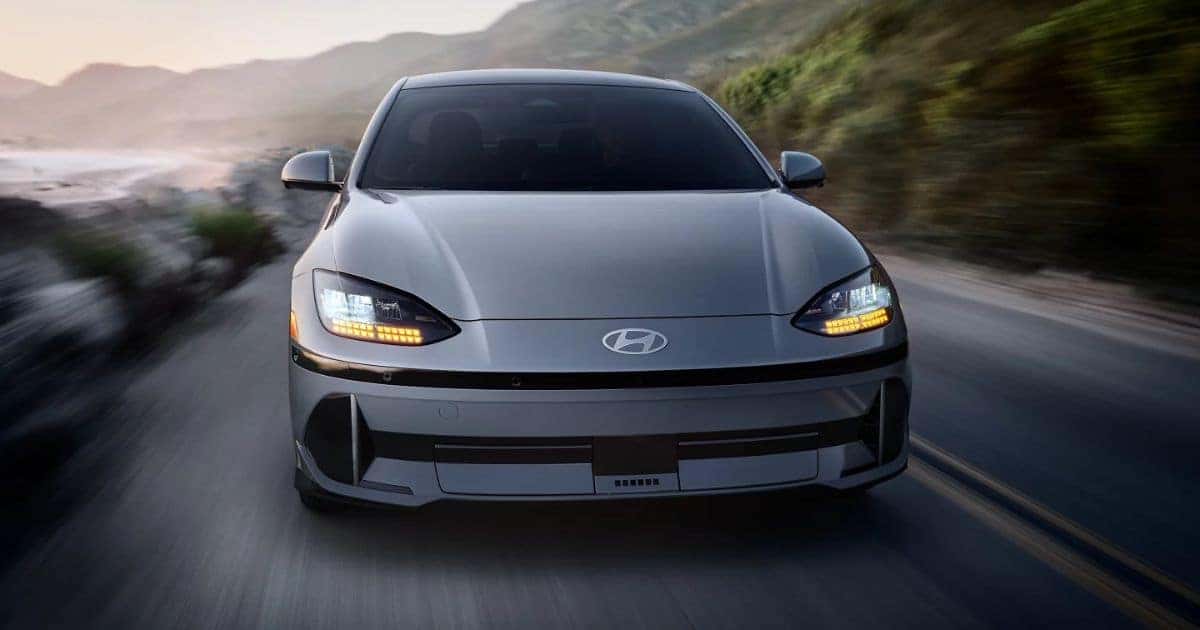
- The 2025 Hyundai IONIQ 6 is one of the best electric sedans available today. It can reach an impressive up-to-342-mile range, largely because of its carefully engineered aerodynamic body, which has the lowest drag coefficient of any Hyundai built.
- Key aerodynamic features in the 2025 Hyundai IONIQ 6 include a single sweeping curved roofline, active air flaps, flat underbody panels, integrated spoilers, and specially-designed low-rolling-resistance tires, all working together to cut through the air with minimal resistance.
- To purchase the 2025 Hyundai IONIQ 6, visit Lithia Hyundai of Reno and let our expert team show you what makes this electric sedan a perfect fit in Reno NV.
Also Read: Top 7 Reasons Why You Should Buy the Ioniq 5 2025 Today
Aerodynamics is a fancy way of talking about how easily a car moves through the air. For an EV, this is important because the less air pushes against the car, the less battery power it needs to use. And, with the 2025 Hyundai IONIQ 6’s smooth curve, no wonder it can travel up to 342 miles in just a single charge!
But what other aerodynamic features in the Hyundai IONIQ 6 contribute to its electric efficiency? This guide explains the 2025 Hyundai IONIQ 6 aerodynamic features. It covers why they matter and how they help drivers in Reno, NV.
How the 2025 Hyundai IONIQ 6 Cuts Through Reno Wind
Aerodynamics is a term that refers to how easily a moving object passes through air. When a car drives down the road, air pushes back against it. The harder the air pushes, the more energy the car requires to maintain its motion.
In a gas-powered car, the engine burns a little more fuel. In an electric car like the Hyundai IONIQ 6 EV, that extra push from the air drains the battery faster, which cuts into your driving range.
This is why the drag coefficient matters so much. This drag coefficient is a number that describes how aerodynamic a shape is. The lower the number, the less air resistance. The 2025 Hyundai IONIQ 6 has a 0.22 drag coefficient, the lowest drag coefficient of any Hyundai vehicle.
But what other factors contribute to this low drag coefficient?
5 Key Features of Hyundai IONIQ 6 Aerodynamics
Many details on the car’s outside work together to help the Hyundai IONIQ 6 efficiency.
The Streamlined Single-Curve Roofline Is the IONIQ 6’s Most Important Aerodynamic Feature
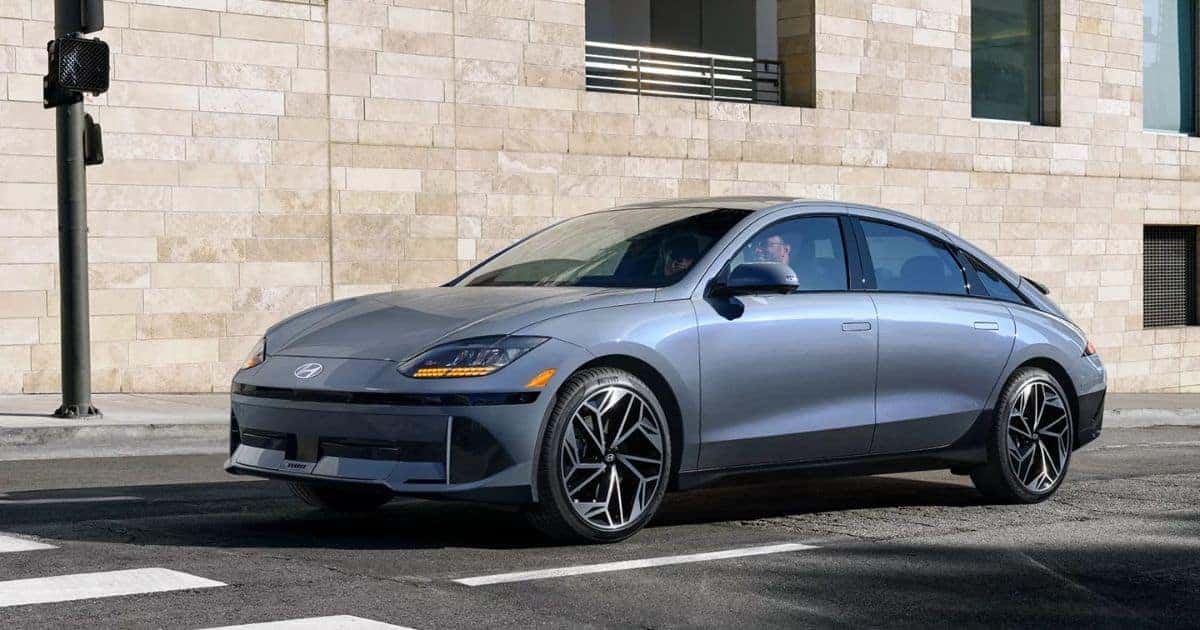
The most obvious aerodynamic design choice on the 2025 Hyundai IONIQ 6 is the roofline. Instead of the boxy, upright profile you see on most sedans or crossovers, the IONIQ 6 flows in one continuous sweeping arc from the front of the hood all the way to the rear of the trunk.
This is sometimes referred to as a fastback or streamliner shape, inspired by the sleek forms found on airplanes and high-speed trains. But how does it work?
When air hits a flat, upright surface, it has to change direction suddenly, which creates turbulence and drag. However, when air hits a curved, sloping surface, it flows smoothly along the body without becoming chaotic. That smooth flow of air along the IONIQ 6’s single-curve roofline is one of the primary reasons the car slices through the air so efficiently.
For people driving on highways in Reno NV, this design is helpful. Wind can be quite strong in the high desert, but the Hyundai IONIQ 6 aerodynamics help it stay stable and save energy on every trip.
Active Air Flaps in the Front Grille Automatically Open and Close to Manage Airflow
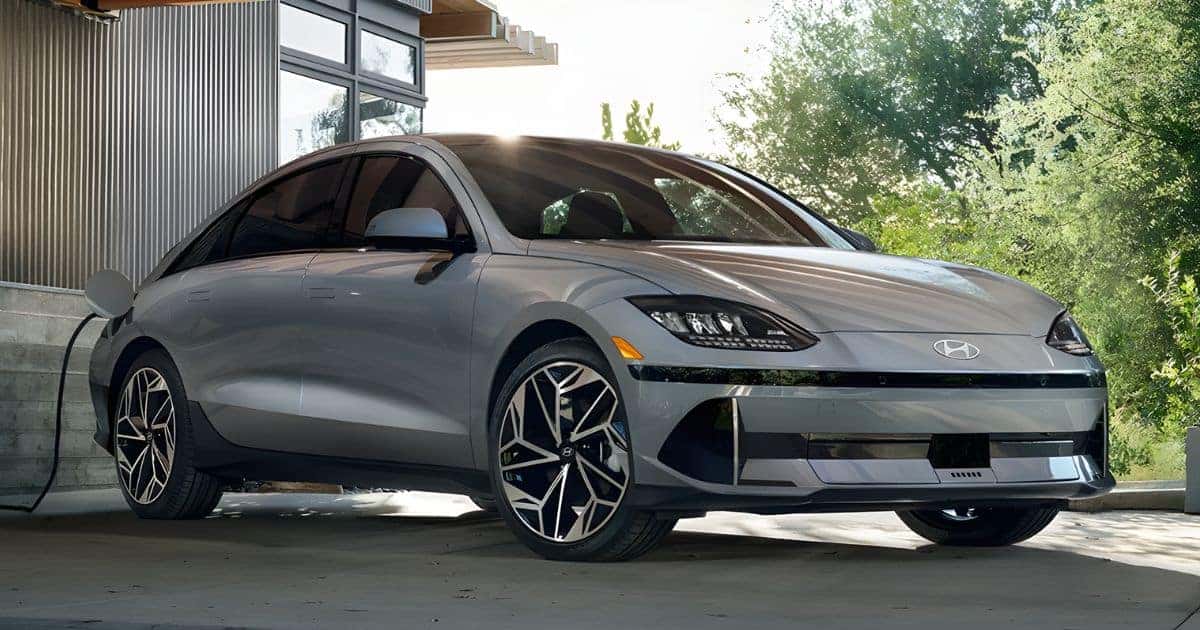
One important feature is the set of active air flaps in the lower front grille. These flaps stay closed most of the time to help the car move through the air smoothly. They only open when the car needs to cool down its motor or battery.
This smart system means the car is always in the most aerodynamically efficient state possible without any input from the driver, adapting in real time rather than being a fixed design.
Integrated Spoiler and Flush Door Handles Reduce Small Sources of Aerodynamic Drag
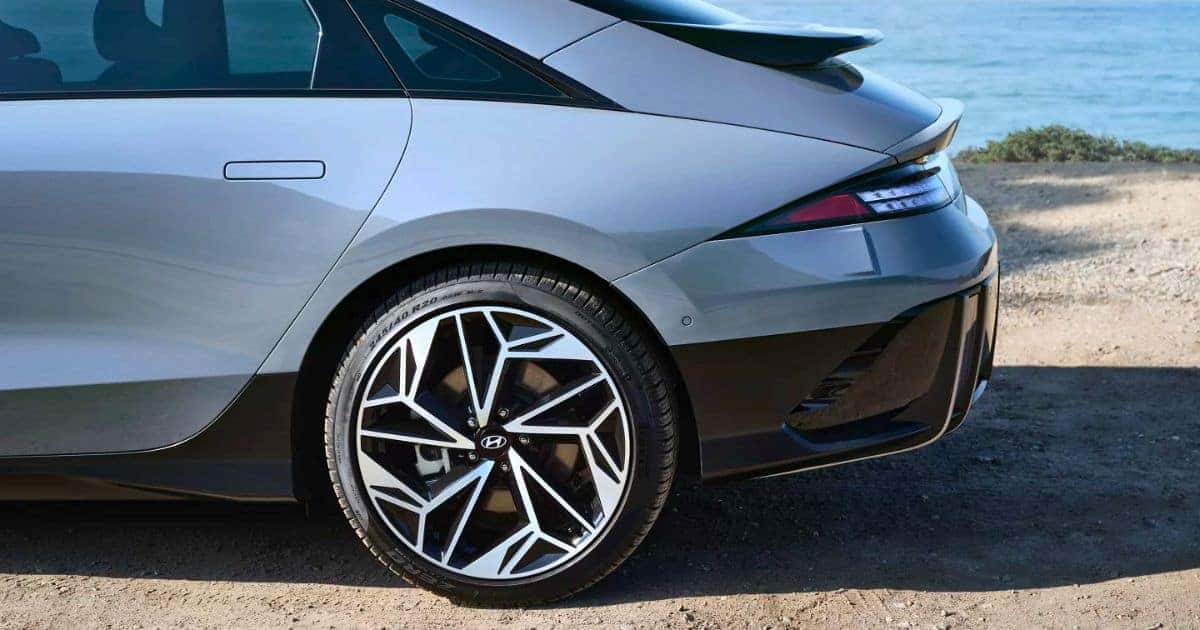
A rear spoiler is built directly into the trunk lid rather than being bolted on as an afterthought. This integrated spoiler manages the airflow leaving the top of the car and prevents it from creating lift at the rear, keeping the car planted on the road and reducing drag.
The door handles are also part of this clever plan. Instead of sticking out, they sit flush against the body of the car. This positioning prevents air from getting caught in the handle area, creating less drag.
A Flat Underbody and Rear Diffuser Stop Turbulence from Building Up Underneath the Car
Most drivers never think about what is happening under their car while driving, but it matters a lot for aerodynamic efficiency. When the underbody of a car is rough and uneven with exposed mechanical components, air tumbles around underneath. This creates a turbulent mess that slows the car down.
The 2025 Hyundai IONIQ 6 addresses this with a largely flat, smooth underbody. Panels cover the otherwise exposed mechanical parts and create a clean, flat surface for air to travel along.
At the rear of the car, a rear diffuser helps manage the air as it exits from under the vehicle. The diffuser gradually widens as it reaches the back, slowing the rushing air down in a controlled way.
This prevents the low-pressure zone that can form behind a fast-moving car and essentially suck the car backward. This effectively reduces drag and helps the car stay stable at high speeds.
Low-Rolling-Resistance Tires and Available 20-Inch Wheels Are Chosen with Efficiency in Mind
Low-rolling-resistance tires made with special rubber compounds and tread patterns lower the amount of energy lost as the tire deforms and reforms with every rotation. Less energy lost to the tires means more energy available to push the car down the road.
The available 20-inch alloy wheels also factor into aerodynamics. These wheels use spoke shapes and wheel covers to manage the airflow around the wheel wells. Open, spoked wheels create a lot of turbulence in the wheel well area. A more covered, sculpted wheel design reduces that turbulence and contributes to the overall low-drag profile of the Hyundai IONIQ 6 EV.
With these features, you can see that every part of this Hyundai IONIQ 6 redesign exists to help you go further between charges.
The IONIQ 6 Interior Complements the Aerodynamic Design with a Clean, Open Feel
The aerodynamic shape of the 2025 Hyundai IONIQ 6 does something else that drivers will appreciate: it creates an unusually airy and open cabin.
The swooping roofline and flat floor made possible by the EV platform make the Hyundai IONIQ 6 interior spacious and comfortable, with plenty of legroom in the front and back. Plus, the cabin has a simple design that avoids clutter, putting everything you need within reach.
Apart from its spacious and clean interior, the Hyundai IONIQ 6 EV comes with dual 12.3-inch screens. One screen shows your driving speed and battery info, while the other handles your navigation and music.
You can also find five USB ports: 1 front USB data port, 2 front USB-C center console charging ports, and 2 rear USB-C charging ports. Higher trims like the Hyundai IONIQ 6 Limited have extra luxury features. These include a wide sunroof and a head-up display that projects important info onto the windshield.
Performance, Efficiency, and Hyundai IONIQ 6 Specs Explained
The Hyundai IONIQ 6 specs show that this car is fast and powerful. Depending on the model you choose, you get different levels of power. The Hyundai IONIQ 6 SE Standard Range comes with 149 horsepower and is rear-wheel drive, a great choice for daily driving around town.
If you need more power for climbing hills near Reno NV, you might choose the Hyundai IONIQ 6 All Wheel Drive SE model. This trim has two motors and provides up to 320 horsepower.
For those who prefer a Hyundai IONIQ 6 0 60 performance that feels quick and responsive, buy the dual-motor model of the Hyundai IONIQ 6 SEL with its 446 lb ft of torque. But even with the Hyundai IONIQ 6 SE, its single motor model has 225 horsepower and feels zippy on the road.
Range is another way this Hyundai IONIQ 6 electric car makes life easier. The SE model with the long-range battery can go 342 miles. Even the models with larger 20-inch wheels can go 270 to 291 miles on a single charge. This means you can drive around town for days without needing to stop for power.
Apart from that, the 2025 Hyundai IONIQ 6 Limited comes with the Vehicle-to-Load (V2L) feature in the second row. This technology lets the car act like a giant power bank where you can plug in things like a laptop or even an electric scooter using 120V outlets inside or outside the vehicle.
Why the Hyundai IONIQ 6 is the Right Choice for Reno NV Drivers
When you look at the Hyundai IONIQ 6 horsepower and the amazing Hyundai IONIQ 6 aerodynamics, it is clear that this car is a leader in its class. It combines speed, range, and a futuristic look that you will not find anywhere else. The Hyundai IONIQ 6 redesign shows that Hyundai is pushing the limits of what an electric vehicle can do.
If you are in Reno, NV, and want to see how these aerodynamic design choices translate into a real driving experience, go to Lithia Hyundai of Reno. You can find many great options, including brand new and used Hyundai IONIQ 6 models.
What are you waiting for? Stop by Lithia Hyundai of Reno service center or showroom today to see the 2025 Hyundai IONIQ 6 specs for yourself.
Read Next: 2026 Hyundai Elantra Changes: What’s New and What’s Gone
0 comment(s) so far on 5 Hyundai IONIQ 6 Aerodynamics Design Secrets for Reno, NV Drivers